
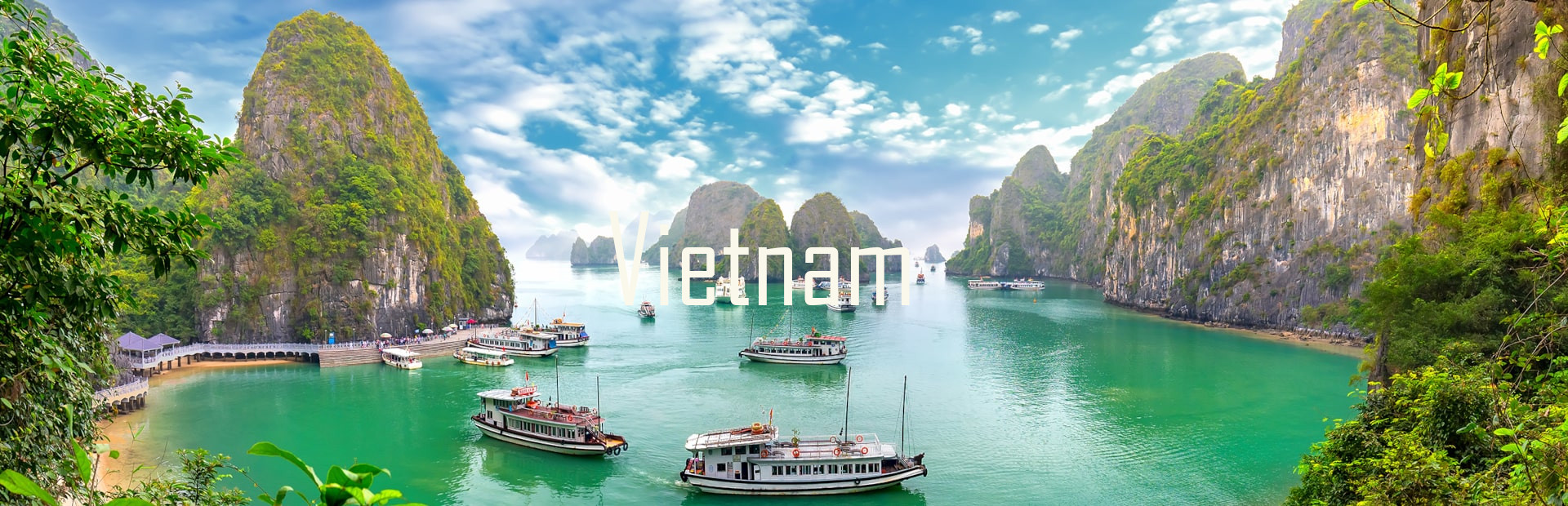
Sapa vs Ha Giang
Sapa and Ha Giang are two of the most famous destinations in northern Vietnam, known for their breathtaking mountain scenery and vibrant ethnic cultures, each offering a completely different travel experience that attracts thousands of visitors every year. But with both showcasing such unique beauty, the big question is: should you choose Sapa or Ha Giang for your Vietnam adventure?
Where is Sapa?
Sapa is a mountain town in Lao Cai Province, located in northern Vietnam, about 320 kilometers northwest of Hanoi. Nestled in the Hoang Lien Son mountain range, Sapa is famous for its cool climate, breathtaking rice terraces, and rich ethnic culture.
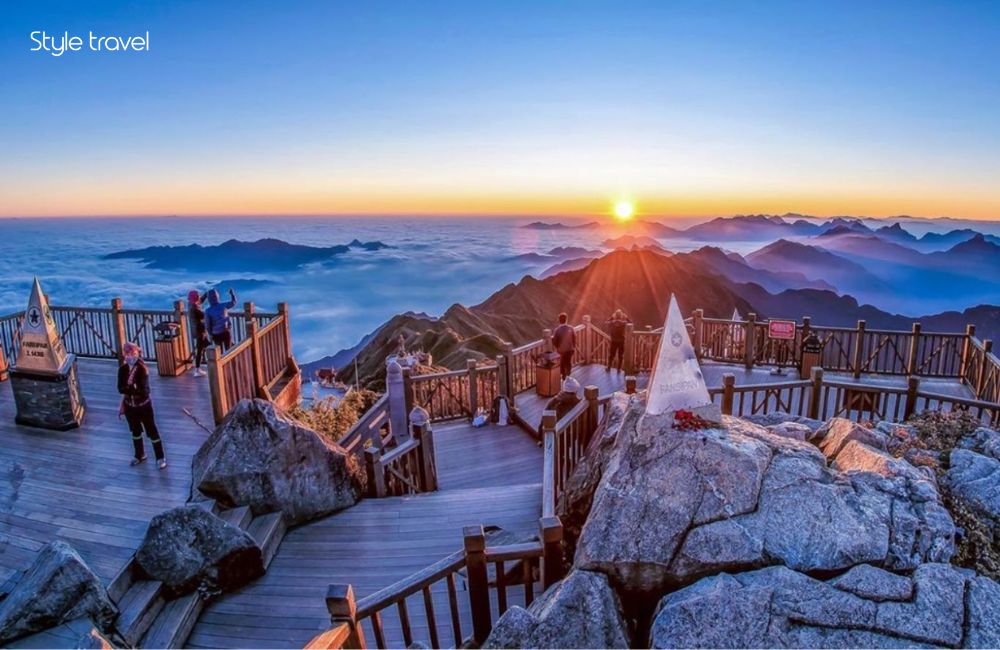
Fansipan, the highest mountain in Indochina
The best time to visit Sapa is from March to May and September to November, when the weather is pleasant and the landscapes are at their most beautiful. September is particularly popular because the rice terraces turn golden during the harvest season.
Sapa is best known for its breathtaking rice terraces, ethnic minority villages, and Fansipan, the highest mountain in Indochina at 3,143 meters above sea level. Visitors can reach the summit by hiking or taking a modern cable car, making it one of the most iconic experiences in northern Vietnam.
Read more: Things to do in Sapa, Vietnam
Where is Ha Giang?
Ha Giang is Vietnam’s northernmost province, located about 300 kilometers north of Hanoi and bordering China. Known for its dramatic mountain landscapes, winding roads, and authentic cultural experiences, Ha Giang is widely regarded as one of Vietnam’s most spectacular destinations for adventure travel.
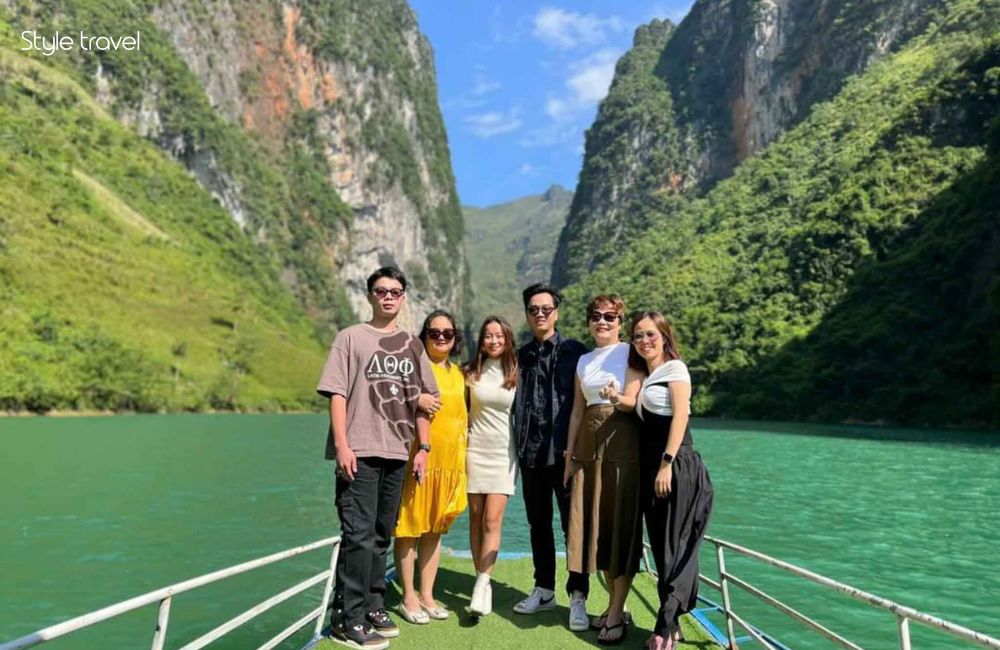
The Nho Que River, Ha Giang
The best time to visit Ha Giang is from September to November and March to May, when the weather is pleasant and the scenery is at its finest. Autumn brings golden rice terraces, while spring covers the mountains with colorful blossoms.
Ha Giang is most famous for the Ha Giang Loop, a scenic motorbike route that takes travelers through breathtaking mountain passes, traditional ethnic villages, and stunning natural landmarks. Highlights include the Dong Van Karst Plateau, Ma Pi Leng Pass, and the emerald waters of the Nho Que River, making Ha Giang a top destination for adventure seekers and nature lovers.
Sapa or Ha Giang: Which should you visit in Vietnam?
Choosing between Sapa and Ha Giang can be difficult, as both destinations offer unforgettable experiences in northern Vietnam. However, each appeals to a different type of traveler and travel style.
Sapa is the better choice for travelers looking for comfort, convenience, and iconic attractions. The town is easily accessible from Hanoi and offers a wide range of accommodations, from luxury resorts to cozy homestays. Visitors can enjoy trekking through rice terraces, exploring ethnic minority villages, and taking a cable car ride to Fansipan, the highest mountain in Indochina. Sapa is especially suitable for families, couples, first-time visitors to Vietnam, and travelers with limited time.
Ha Giang, on the other hand, is ideal for travelers seeking adventure, freedom, and off-the-beaten-path experiences. The province is famous for the Ha Giang Loop, one of Southeast Asia’s most scenic road trips. Travelers can explore dramatic mountain passes, remote villages, and the stunning Dong Van Karst Plateau. Ha Giang is best suited for adventure seekers, photographers, nature lovers, and those who enjoy authentic local culture.
Both destinations offer spectacular scenery, vibrant ethnic traditions, local markets, and opportunities to experience life in Vietnam’s northern highlands. However, Sapa is generally more developed and tourist-friendly, while Ha Giang remains more rugged, remote, and untouched.
If you prefer comfortable travel, famous landmarks, and easier transportation, choose Sapa. If you are looking for adventure, breathtaking roads, and a more authentic experience, Ha Giang may be the better option. Travelers with enough time can combine both destinations to discover the diverse landscapes and cultures of northern Vietnam.
Can you visit both Sapa and Ha Giang in one trip?
Yes. In fact, many travelers combine Sapa and Ha Giang in a single itinerary to experience the best of northern Vietnam. While the two destinations share beautiful scenery and rich cultural heritage, they offer very different experiences that complement each other perfectly.
A combined itinerary is recommended for travelers with at least 7 to 10 days who want to explore northern Vietnam beyond the usual tourist routes. Sapa offers iconic rice terraces, traditional villages, and the opportunity to visit Fansipan, while Ha Giang is renowned for its dramatic mountain passes, the Ha Giang Loop, and some of the most breathtaking road-trip scenery in Southeast Asia.
By visiting both destinations, travelers can experience golden rice fields, ethnic minority communities, scenic trekking routes, panoramic viewpoints, and authentic local culture all within a single journey. The combination provides a balance between the comfort and accessibility of Sapa and the adventurous spirit of Ha Giang.
However, travelers should be aware that moving between Sapa and Ha Giang requires several hours of road travel. The mountainous terrain can also be physically demanding, especially for those planning trekking activities in Sapa or a multi-day Ha Giang Loop tour. For this reason, a combined itinerary is best suited for active travelers, photographers, nature lovers, and those seeking a deeper exploration of northern Vietnam.
If your schedule is limited to only three or four days, it is usually better to choose one destination. However, if you have a week or more, combining Sapa and Ha Giang can provide one of the most rewarding travel experiences in Vietnam, showcasing the diverse landscapes, cultures, and natural beauty of the country’s northern highlands.
Suggested 7-day itinerary for Sapa and Ha Giang
If you have a week to explore northern Vietnam, combining Sapa and Ha Giang is an excellent way to experience the region’s diverse landscapes and cultures.
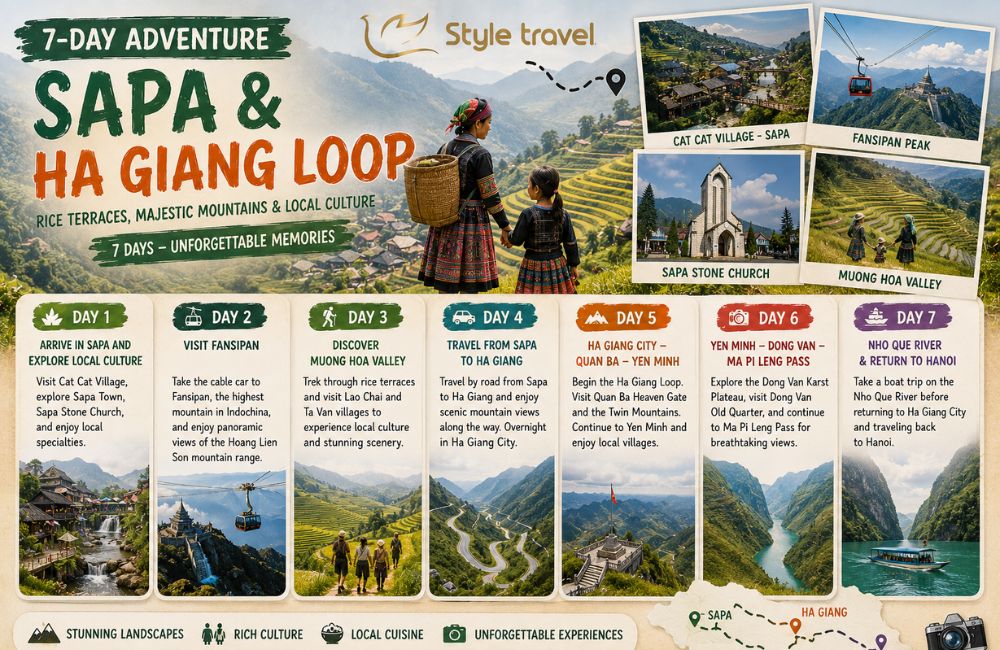
Day 1: Arrive in Sapa and explore local culture
Arrive in Sapa and visit Cat Cat Village, where you can learn about the traditions of the H’Mong people and enjoy beautiful mountain scenery. Later, explore Sapa Town, visit Sapa Stone Church, and sample local specialties.
Day 2: Visit Fansipan
Take the cable car to Fansipan, the highest mountain in Indochina, and enjoy panoramic views of the Hoang Lien Son mountain range. Spend time exploring the summit and nearby attractions before returning to Sapa Town.
Day 3: Discover Muong Hoa Valley
Trek through the famous rice terraces of Muong Hoa Valley and visit ethnic minority villages such as Lao Chai and Ta Van. This is one of the best ways to experience Sapa’s natural beauty and local culture.
Day 4: Travel from Sapa to Ha Giang
Travel by road from Sapa to Ha Giang and enjoy the scenic mountain landscapes along the way. Spend the evening in Ha Giang City and prepare for the Ha Giang Loop.
Day 5: Ha Giang City – Quan Ba – Yen Minh
Begin the Ha Giang Loop and travel through Quan Ba Heaven Gate and the Twin Mountains. Continue to Yen Minh while enjoying spectacular mountain views and local villages.
Day 6: Yen Minh – Dong Van – Ma Pi Leng Pass
Explore the Dong Van Karst Plateau, visit Dong Van Old Quarter, and continue to Ma Pi Leng Pass. Enjoy breathtaking views of the surrounding mountains and valleys.
Day 7: Nho Que River and return to Hanoi
Take a boat trip on the Nho Que River before returning to Ha Giang City and traveling back to Hanoi.
This itinerary combines Sapa’s iconic rice terraces and Fansipan Mountain with the dramatic landscapes of Ha Giang, offering a memorable introduction to northern Vietnam.
Both Sapa and Ha Giang are among the most spectacular destinations in northern Vietnam, but they offer very different travel experiences. Sapa is ideal for travelers seeking comfort, iconic attractions, and easy access to breathtaking scenery, while Ha Giang is perfect for those looking for adventure, dramatic landscapes, and authentic local culture.
If you have limited time, choose the destination that best matches your travel style. However, if you have a week or more, combining both Sapa and Ha Giang is highly recommended to experience the full diversity of northern Vietnam, from the terraced rice fields of Sapa to the legendary mountain passes of Ha Giang.
For travelers who want a smooth and well-planned journey, Style Travel offers customized tours across northern Vietnam. With tailor-made itineraries designed around your interests, budget, and schedule, you can enjoy a hassle-free experience whether you choose Sapa, Ha Giang, or both destinations in one trip.
FAQs
Is Sapa or Ha Giang more beautiful?
Both destinations are stunning in their own way. Sapa is famous for its terraced rice fields and Fansipan Mountain, while Ha Giang is known for dramatic mountain passes, deep valleys, and rugged landscapes.
Is Ha Giang worth visiting for non-riders?
Yes. Travelers who do not ride motorcycles can join an Easy Rider tour with a local driver or explore the region by private car.
Is Sapa suitable for families?
Yes. Sapa offers comfortable accommodations, convenient transportation, and family-friendly attractions, making it an excellent choice for families with children.
How many days should I spend in Sapa and Ha Giang?
Most travelers spend 2-4 days in Sapa and 3-5 days in Ha Giang. If you plan to visit both destinations, at least 7 days is recommended.
Which destination is cheaper?
Ha Giang is generally more affordable, particularly when it comes to accommodation and local dining. However, travel costs depend on your itinerary and preferred travel style.


Hanoi vs. Ho Chi Minh City

Best places to visit in Vietnam in January

Vietnamese fruits