
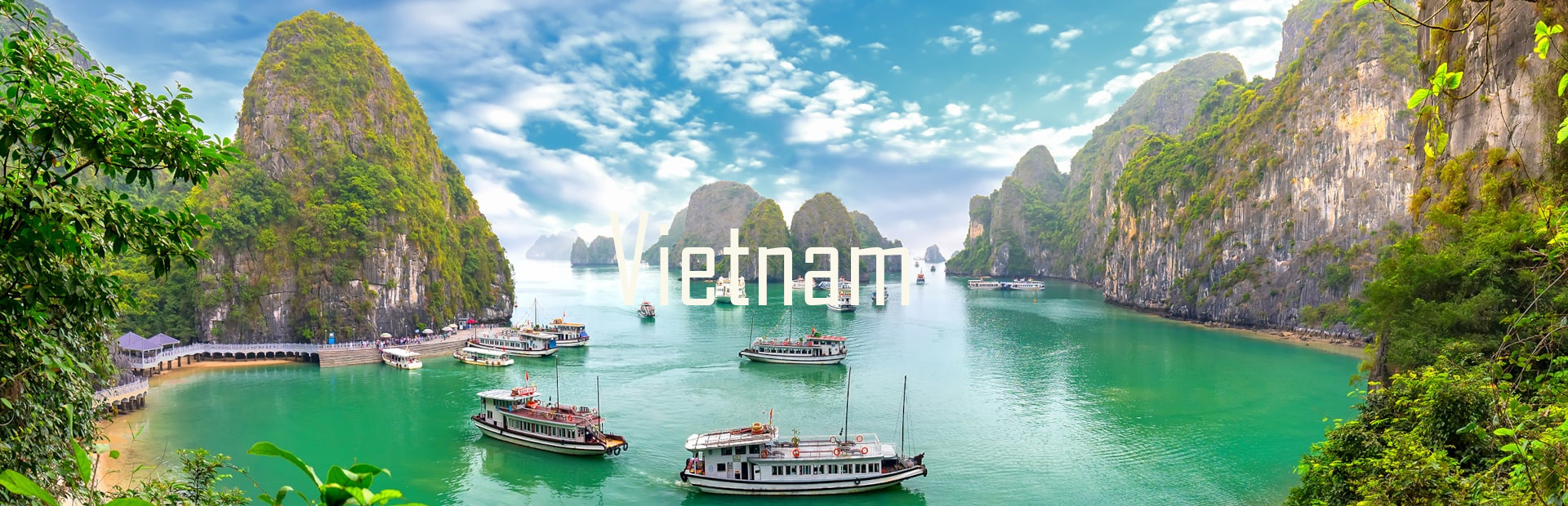
Best time to visit Thailand and Vietnam
Thailand and Vietnam are two of the most popular destinations in Southeast Asia, offering diverse cultures, stunning landscapes, delicious cuisine, and plenty of exciting experiences to discover. So, when is the best time to visit Thailand and Vietnam? Let’s explore the ideal travel seasons, weather conditions, and practical tips in this guide to help you choose the right time for a memorable trip.
Weather in Thailand
Thailand has a tropical monsoon climate with three main seasons: the cool season, the hot season, and the rainy season. However, weather conditions can vary significantly across the country. Northern and central Thailand generally experience these three distinct seasons, while southern coastal areas are influenced by two different monsoon patterns along the Andaman Sea and the Gulf of Thailand, resulting in different rainy seasons on each coast.
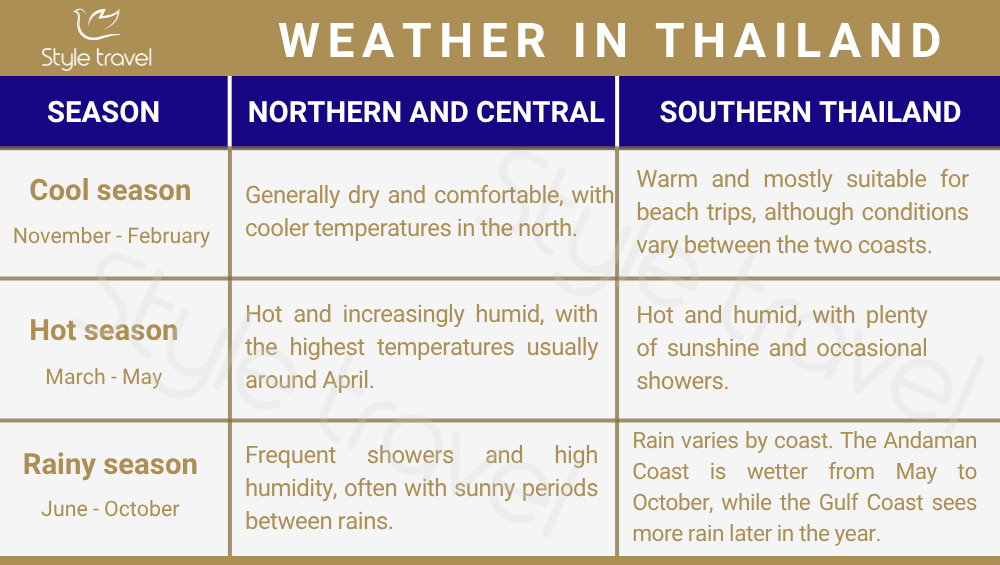
The cool season from November to March is generally the most pleasant time to visit Thailand, with dry weather ideal for sightseeing and outdoor activities. However, the best time to visit also depends on what you want to experience.
The best time to visit Thailand varies depending on your destination and travel experience:
- For sightseeing: November to March, when the weather is generally dry and pleasant.
- For festivals: November to April, with major celebrations such as Loy Krathong and Songkran.
- For the Andaman Coast: November to April, when conditions are generally favorable for beach trips.
- For the Gulf Coast: January to August, which generally offers better beach conditions.
- For lower prices and fewer crowds: May to October, although rain is more frequent.
Weather in Vietnam
Vietnam has a tropical monsoon climate, but weather conditions vary significantly from north to south. The country is generally divided into three main regions, each with its own distinct weather patterns. For travelers planning to explore the whole country, November to April is generally a good time to visit, as the weather is more favorable across many destinations.
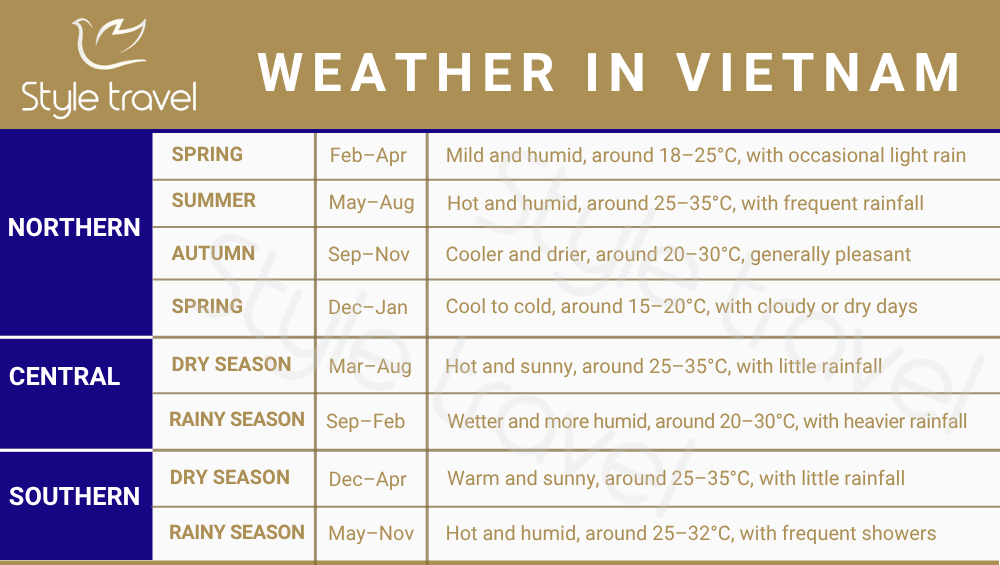
Northern Vietnam experiences four seasons: spring, summer, autumn, and winter, with noticeable changes in temperature throughout the year. Spring and autumn are generally the best times to visit, offering milder temperatures and more comfortable conditions for sightseeing.
Central Vietnam has a hot and dry period from March to August, followed by a wetter period toward the end of the year. February to May is generally a favorable time to visit, with warmer and drier weather in many destinations.
Southern Vietnam remains warm throughout the year, with a clear dry season from December to April and a rainy season from May to November. December to April is generally the best time to visit, with drier and sunnier weather.
Read more: Best time to visit Vietnam
Best time to visit Thailand and Vietnam
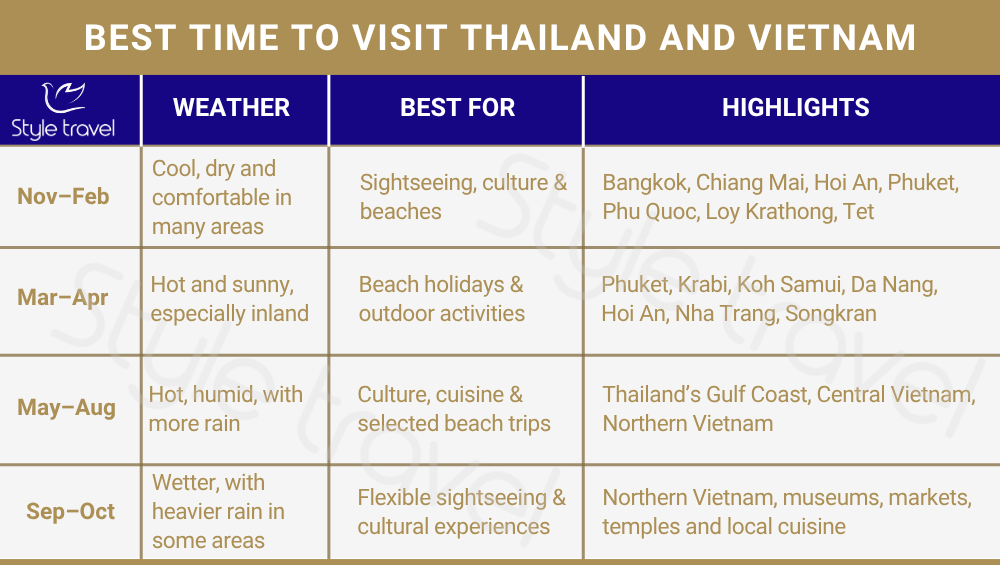
Vietnam has a more diverse climate, while Thailand generally enjoys a warm tropical climate throughout the year. For a combined trip to Thailand and Vietnam, November to February is generally a favorable time to travel, with relatively dry, cooler, and more comfortable weather in many destinations. However, this is also the peak travel season in both countries, so it is advisable to plan ahead and book flights and accommodation early, especially around major holidays.
If you prefer to avoid the busiest travel period, May to October can be an alternative time to visit. The weather can be hotter and more humid, with more frequent rainfall in many areas, but travelers may find fewer crowds at some destinations.
November – February
Thailand generally experiences dry and comfortable weather during this period, although conditions can vary between regions. In Vietnam, the weather differs more noticeably from north to south, with cooler conditions in the north, milder and sometimes wetter weather in central Vietnam, and warm, relatively dry conditions in the south.
Things to do and events: This is a good period for sightseeing, cultural experiences, and beach trips in many destinations. Travelers can explore temples and local markets in Thailand, visit Chiang Mai and Bangkok, cruise through Ha Long Bay, discover Hoi An Ancient Town, or relax on the beaches of Phuket and Phu Quoc. Major events include Loy Krathong in Thailand, usually held in November, and Tet, the Vietnamese Lunar New Year, usually celebrated in January or February.
March – April
Temperatures rise across both countries, with hot and sunny conditions becoming more common. Coastal destinations are well suited to beach trips, while inland areas can become quite hot, particularly in April.
Things to do and events: This period is well suited to beach holidays, outdoor activities, and exploring coastal destinations. Travelers can enjoy the beaches of Phuket, Krabi, Koh Samui, Da Nang, Hoi An, and Nha Trang. One of the biggest highlights is Songkran, Thailand’s traditional New Year festival in April, when cities across the country come alive with water celebrations and cultural activities.
May – August
Thailand and Vietnam become hotter and more humid, with more frequent rainfall in many areas. However, weather conditions vary considerably by region, so some destinations can still offer favorable travel conditions during this period.
Things to do and events: This can be a good time to explore cultural attractions, enjoy local cuisine, and combine sightseeing with resort stays. Travelers looking for beach time can consider Thailand’s Gulf Coast, while Central Vietnam is generally a good option for beach trips and outdoor activities, particularly from May to August. This period can also be suitable for exploring northern Vietnam, although rain and humidity are more common.
September – October
Rainfall becomes more frequent in many parts of Thailand and Vietnam, with some destinations experiencing heavier showers. Central Vietnam and Thailand’s Andaman Coast can be particularly wet, especially from September onward.
Things to do and events: This period is better suited to flexible itineraries that combine sightseeing, food, and cultural experiences. Travelers can explore museums, markets, temples, and local cuisine while keeping some flexibility in the schedule for rainy days. Northern Vietnam can also be an appealing option in October, when temperatures become more comfortable and the weather generally starts to improve.
Planning a trip to Thailand and Vietnam involves more than choosing the right time to visit. From deciding which destinations to combine to arranging transportation, accommodation, and activities, a well-planned itinerary can make your journey smoother and more enjoyable.
At Style Travel, we offer personalized Thailand, Vietnam, and Southeast Asia tours designed around your travel preferences, schedule, and interests. Our travel experts can help you create a detailed itinerary that brings together the destinations and experiences you want to discover, while making your journey comfortable, seamless, and memorable.
Contact Style Travel today to discuss your travel plans and start planning your personalized Thailand and Vietnam itinerary.


Best time to visit rice terraces in Northern Vietnam

Best time to visit Vietnam

Vietnam travel tips

Popular destinations in Vietnam

Things to do in Vietnam

What to do in Vietnam for 5 days?

Things to do in Hanoi

Things to do in Da Nang

Things to do in Hue, Vietnam